

Who Are We?
Polycultural Institute is led by co-founder Jamil Khoury and Marketing Director Nawar Nemeh, who together build projects like the Institute’s flagship Evolve podcast — connecting people, cultures, and communities through art, storytelling, and analysis.
Jamil Khoury
Jamil Khoury is the Co-Founder and Executive Artistic Director of Chicago’s Silk Road Cultural Center, and the Founder and Director of Polycultural Institute, the Think-and-Create Tank of Silk Road Cultural Center. He is a producer, curator, essayist, playwright, and filmmaker.
Jamil's passion for promoting cultural interchange and the study of cultural porosity dovetails seamlessly with his leadership in the non-profit performing arts sector, advocacy for expanding the American story, and earlier experience as an international relocation consultant for Fortune 500 clients. His art-making focuses on West Asian themes and questions of diaspora. He is particularly interested in the intersections of culture, national identity, religion, and belonging.
Jamil is currently a student at the European Graduate School (Saas-Fee, Switzerland, Valletta, Malta, and Bergamo, Italy), where he hopes to complete a PhD in Philosophy, Art, and Social Thought by 2029. He earned a Certificate in Artificial Intelligence Strategy from Cornell University, a Master’s in Religious Studies from The University of Chicago Divinity School, and a Bachelor’s in International Relations from Georgetown University's School of Foreign Service, where he also earned a Certificate in Contemporary Arab Studies. He is a Kellogg Executive Scholar (Kellogg School of Management, Northwestern University) and has been awarded a Certificate of Professional Achievement in Nonprofit Management.

A noted artist and activist, Jamil is the recipient of numerous awards, including: The University of Chicago Diversity Leadership Alumni Award, the Community Leader Award from the Association for Asian American Studies, the Kathryn V. Lamkey Award from Actor’s Equity Association, the ChangeMaker Award from South Asian Americans Leading Together, the 3Arts Artist Award for Playwriting, the After Dark Award for Outstanding New Work (Precious Stones), and the Distinguished Alumni Award from John Hersey High School.
Committed to collaborative art making, Jamil has been an Artist-in-Residence at New Orleans’ Joan Mitchell Center, and Playwright-in-Residence at Tufts University, Benedictine University, North Central College, Valparaiso University, and Knox College. His work has been translated from English into Arabic, German, and Russian, and enjoyed by audiences in the US, Canada, Germany, Jordan, Lebanon, Portugal, Russia, the UK, and beyond.
Nawar Nemeh
Nawar Nemeh is the Marketing Director of Polycultural Institute, where he leads strategy, storytelling, and audience growth for projects like Rebuilding Syria. A journalist and media strategist by training, he specializes in content distribution, social-first campaigns, and translating complex ideas about culture and power into accessible, engaging formats.
Based in the Washington, D.C. area, Nawar also serves as Social Media Marketing Manager for LabX at the National Academies of Sciences, Engineering, and Medicine, overseeing digital strategy for programs that use games, live events, and creative media to spark public engagement with science. He previously led social media at The Objective, a newsroom focused on media equity, where he built distribution systems that center underrepresented communities and critique how mainstream journalism reproduces bias.
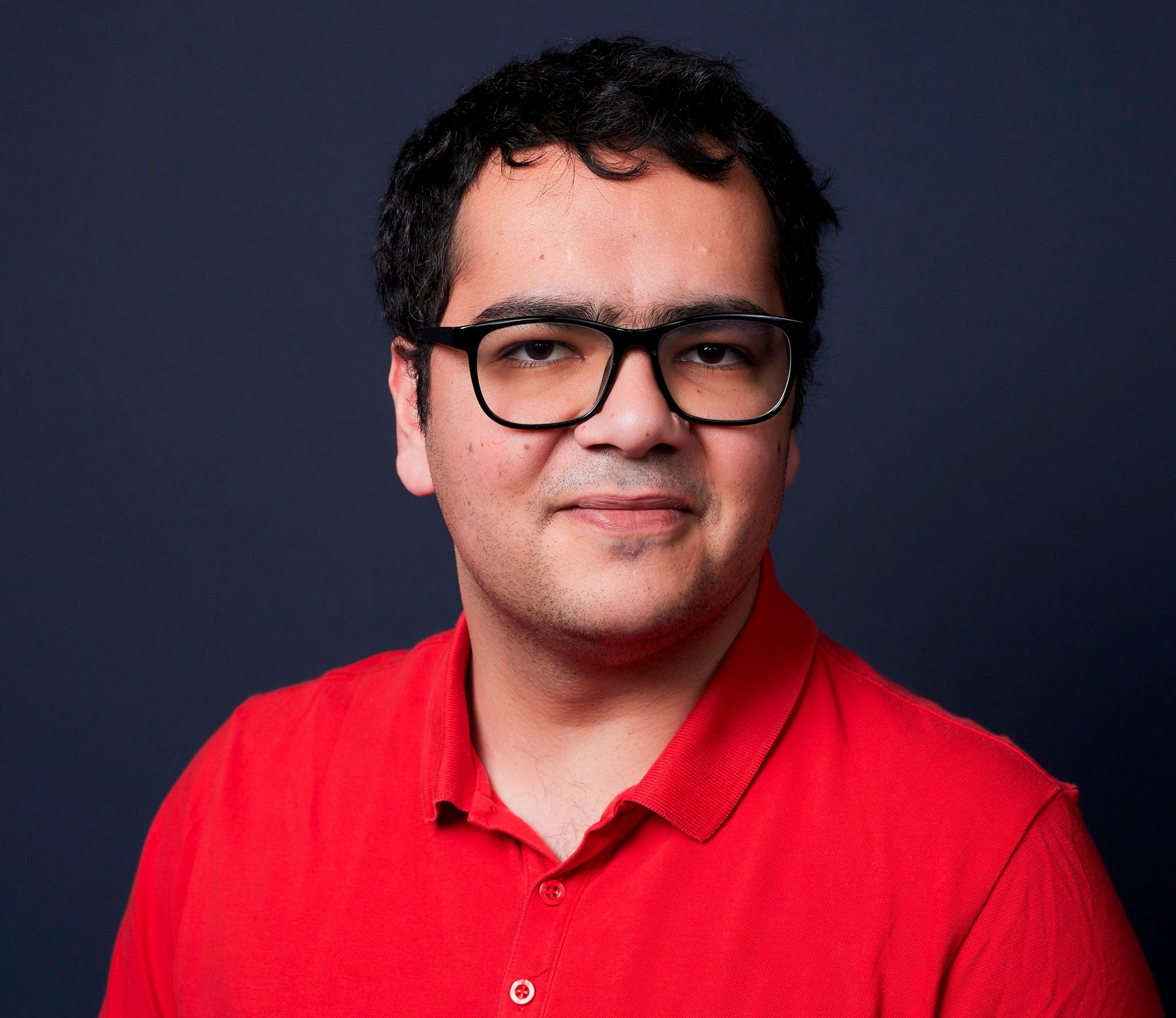
Nawar’s background spans digital journalism, human-rights-oriented research, and policy work, including roles at Radio Free Asia and the Open Technology Fund examining censorship, surveillance, and internet freedom across the Middle East and Asia. Earlier, he organized student power and campus governance at UC Santa Barbara, where he studied public policy and global studies and helped build coalitions around gender, equity, and open knowledge.
At Polycultural Institute, Nawar approaches marketing as cultural strategy: crafting campaigns, podcasts, and essays that challenge polarization, complicate easy narratives about Syria and the SWANA region, and invite audiences into long-term, polycultural ways of thinking and relating.